How Do You Know If a CNC Supplier’s Price Is Fair?
3D Spark
September 6, 2026
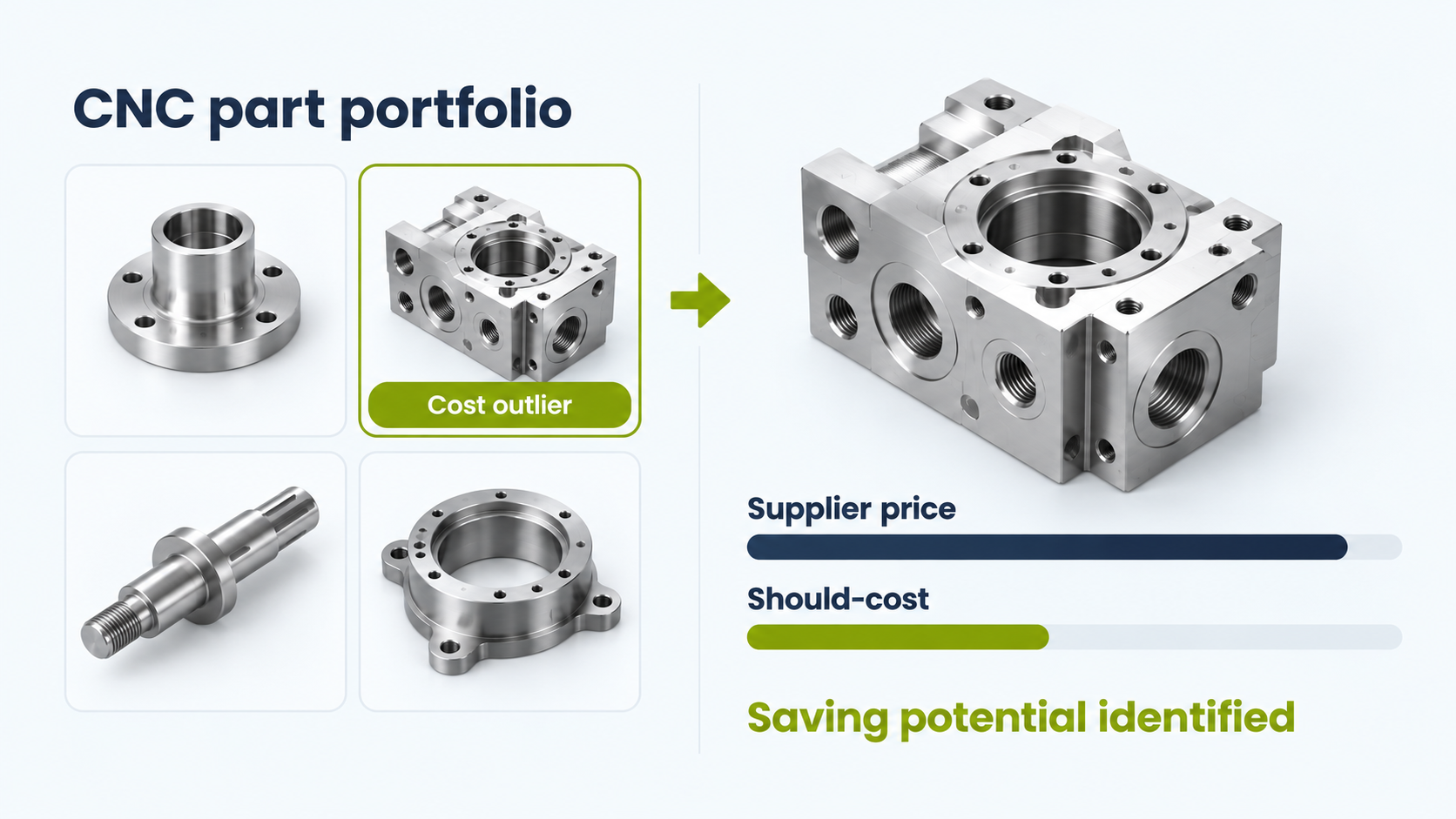
A supplier quotes a price for a CNC-machined part. How do you know whether that price is fair? You can compare it with the last order. You can ask other suppliers for quotes. You can also request a discount. But none of these methods explains what the part should cost based on the actual manufacturing process. That is the gap CNC should-costing fills.
Why CNC quotes are difficult to evaluate
Most quotations show a final price without explaining the assumptions behind it.
Procurement may not know:
Which raw material size was assumed
How much material must be removed
Which CNC machine was selected
How many setups are required
How much programming and machining time was included
How the lot size affected the price
Which additional costs and margins were added
Without this breakdown, it is difficult to separate a technically justified price from one that should be challenged.
Break down the cost
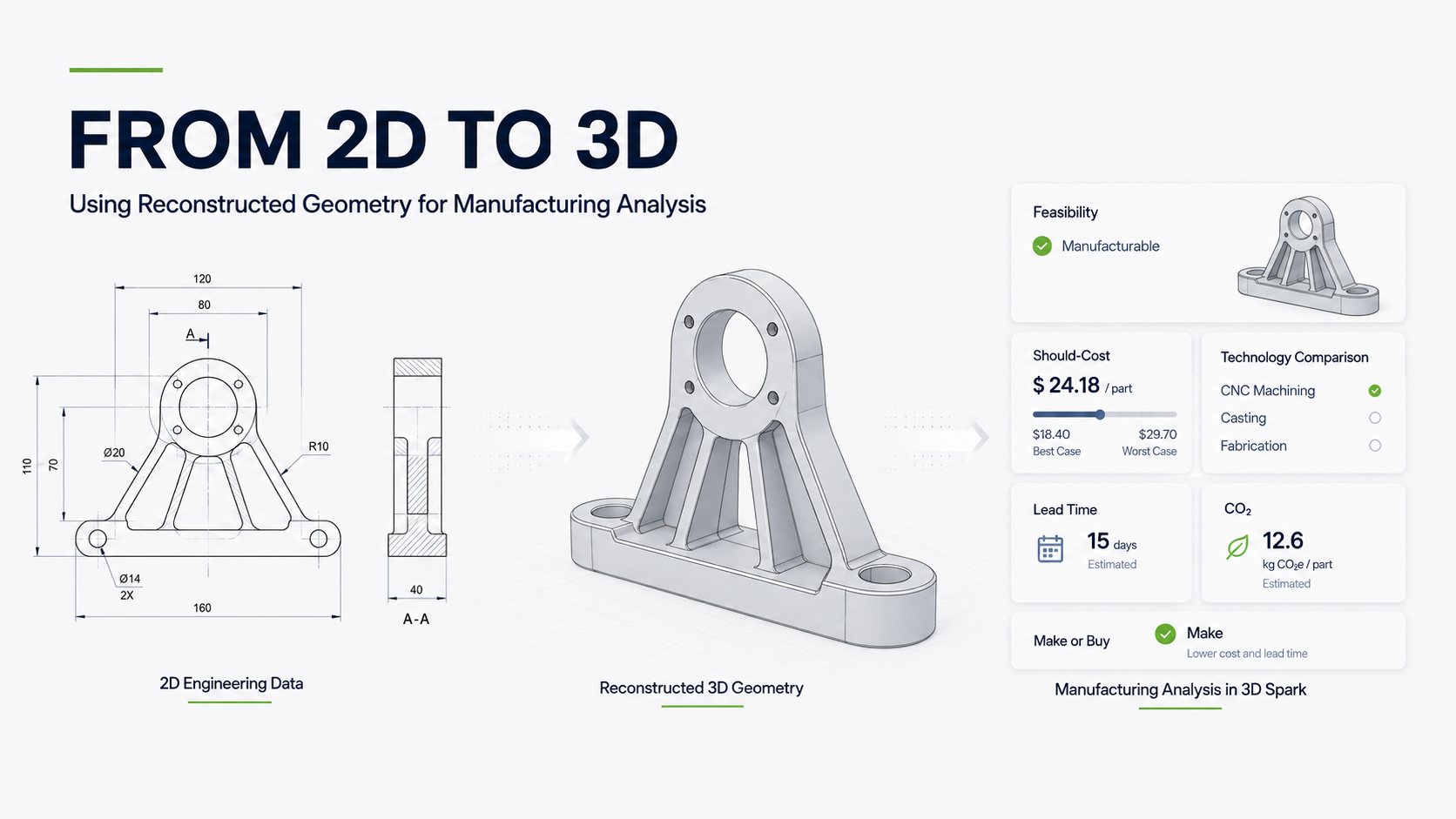
3D Spark analyses the drawing or CAD file and simulates the machining steps required to manufacture the part.
The process follows three steps:
Upload the drawing or CAD file
Simulate the required machining steps
Expose the main cost drivers
The result is a cost build-up from raw material to market price. Instead of seeing only one final number, procurement can understand how much of the price comes from material, machining, programming and other cost elements.
Compare the supplier quote with the should-cost
A useful price review considers three values:
Value
What it shows
Value
Supplier quote
What it shows
The price offered by the supplier
Value
Should-cost
What it shows
The expected cost based on the manufacturing process
Value
Market price
What it shows
A competitive price after accounting for commercial factors
The should-cost is not another supplier quote. It is an independent manufacturing-based reference. A difference between the supplier price and the should-cost does not automatically mean the supplier is overcharging. The difference could be caused by inspection, documentation, certification, short delivery times or capacity constraints.
The breakdown helps procurement identify what needs to be explained.
Focus on the largest cost driver
Not every cost line deserves the same attention.
If machining is the largest part of the cost, procurement can ask:
Which operations take the most time?
How many setups were included?
Is the selected machine suitable for the part?
Can the manufacturing sequence be improved?
How does the lot size affect the machining cost per part?
If material is the largest cost driver, the discussion may instead focus on stock dimensions, material prices or expected scrap. This makes the negotiation more specific.
A fair price should be explainable
The lowest CNC price is not always the best price. Quality, capacity, delivery reliability and technical experience all matter. A fair price is one that can be explained by the manufacturing requirements and the supplier’s commercial conditions. Should-costing gives procurement a defensible number for that conversation. It helps you move from “Can you reduce the price?” to “Which manufacturing assumption explains the difference?”
That is a much stronger place to start.
Frequently asked questions
Is a should-cost the same as a supplier quote?
No. A supplier quote reflects one supplier’s production setup and commercial conditions. A should-cost provides an independent estimate based on the expected manufacturing process.
Can a supplier price reasonably be higher than the should-cost?
Yes. Certification, inspection, low capacity, urgent delivery and other requirements can justify a higher price. The cost breakdown helps make those differences visible.
What information is needed?
A drawing or CAD file is the starting point. Material, lot size and other manufacturing requirements improve the quality of the analysis.
Want to see the cost breakdown for one of your CNC-machined parts? Book a meeting with 3D Spark.
Convert your file for free or Book a demo!
Upload your part and get started for free
Try our platform for free by uploading your 2D and receive it's 3D version!
With features to make every step of your manufacturing business more efficient and scalable, coupled with a support team excited to help you, getting started with 3D Spark has never been easier.


)%20(1).avif)