3D Spark - Würth Additive

Turn Parts into Digital Inventory

3D Spark + Würth Additive:

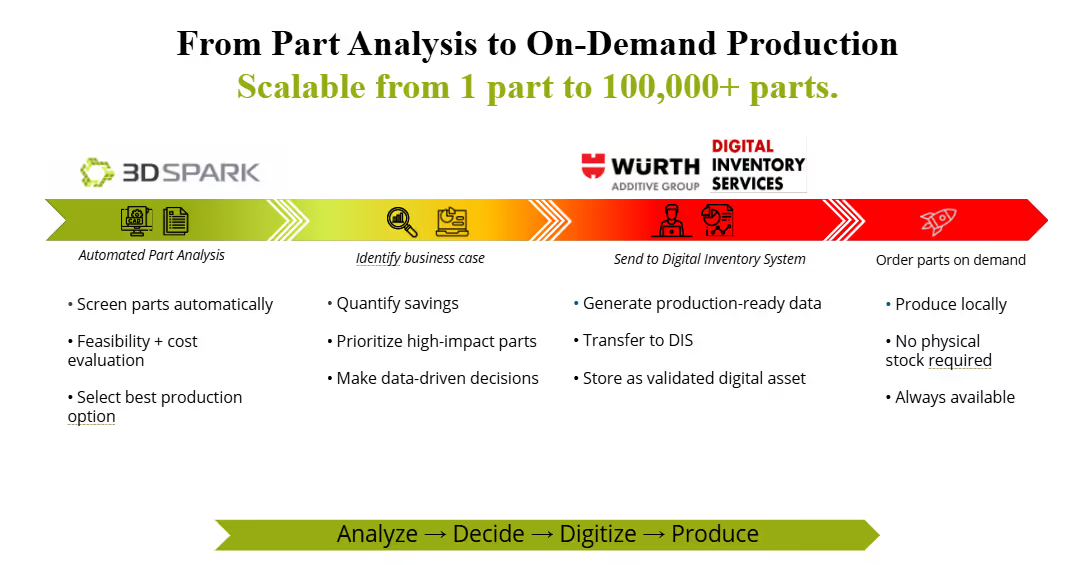
  • The integration between 3D Spark and Würth Additive Group connects part qualification with secure digital inventory and on-demand manufacturing in one continuous workflow.
  • Goal: Identify which parts should be digitized and move directly to production-ready digital inventory.

Trusted by

From Part Portfolio to On-Demand Production

Step 1 — Upload Data

Parts Portfolio (CAD, Drawings, ERP Data, etc.)

Step 2 — Find the right parts

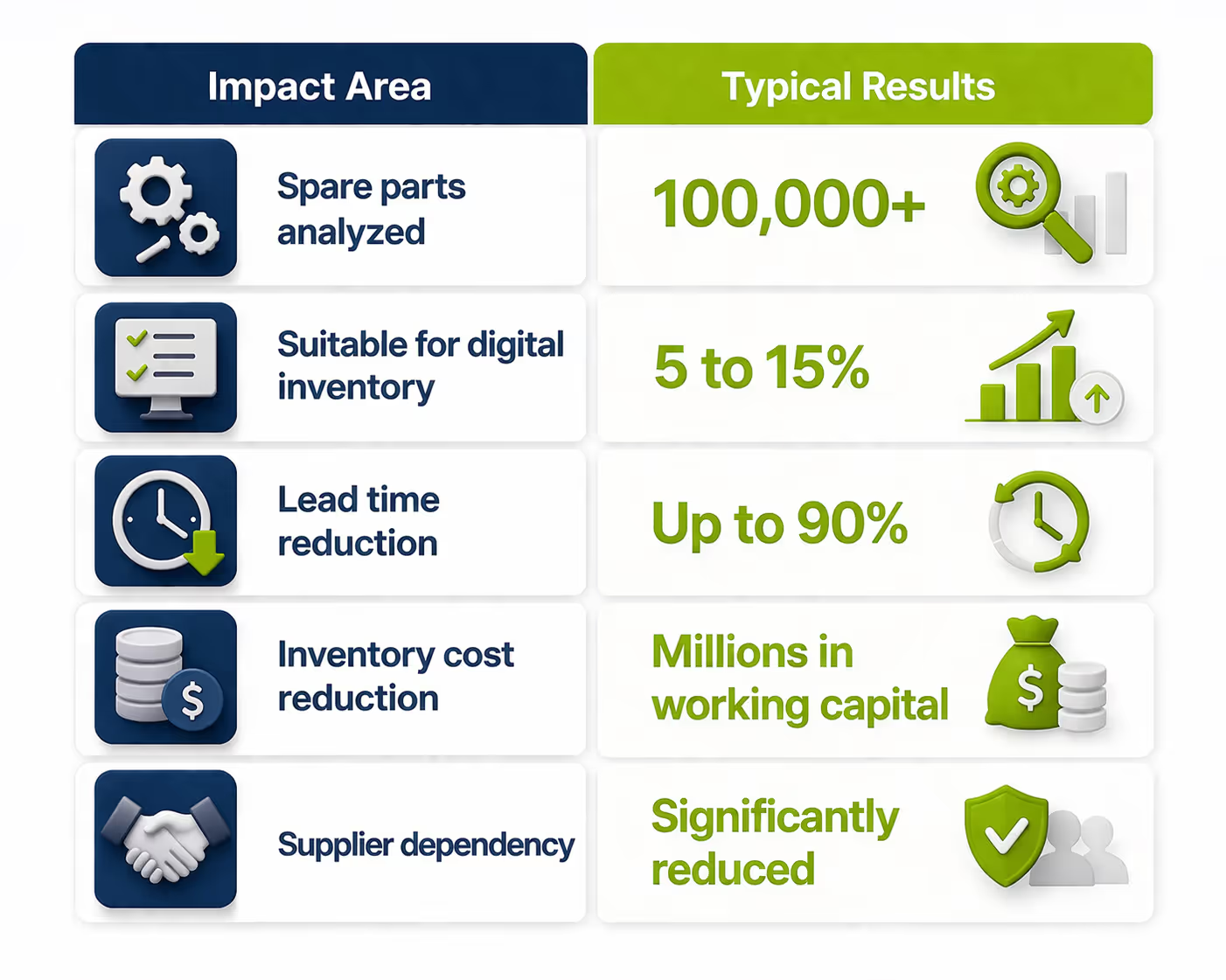
Manufacturers often manage 100,000+ parts, but only 5 to 15% are suitable for digital inventory. 3D Spark helps identify these parts quickly.

Step 3 — Digital Manufacturing Recipe

Create a production-ready setup including:
- Manufacturing technology
- Material specifications
- Process parameters

Step 4 — Store in digital inventory

Transfer validated recipes into Würth Additive’s Digital Inventory Services platform.

Step 5 — Produce on demand

Manufacture parts through distributed production networks when needed.

Why manufacturers like Würth Additive are moving toward digital inventory?

Global supply chains have become increasingly unpredictable. Long supplier lead times, discontinued components, and logistics disruptions make part availability harder to manage.

At the same time, physical inventory ties up working capital without guaranteeing availability. Digital inventory offers a more efficient model.

What changes

  • Instead of storing parts, store validated digital manufacturing assets
  • Instead of waiting for suppliers, produce parts on demand
  • Instead of centralized inventory, enable distributed production

Why this matters

  • Reduce dependency on legacy suppliers
  • Lower working capital tied up in inventory
  • Shorten lead times for critical parts
  • Improve supply chain resilience
What 3D Spark adds for Würth Additive?
3D Spark Platform - Procurement 1

3D Spark is the layer that determines what should be digitized and how it should be produced.

Screen entire part portfolios at scale

Work with CAD, drawings, images, and ERP data

Generate 3D models using AI when needed

Compare 15+ manufacturing technologies

Estimate manufacturability, cost, lead time, and CO2

Create validated production-ready manufacturing recipes

3D Spark Platform - Procurement 2
Typical impact for manufacturers

Manufacturers using portfolio analysis and digital inventory strategies can achieve measurable operational improvements.

Industries using digital inventory

Digital parts strategies are especially valuable in industries with large portfolios and long equipment lifecycles.

Rail and transportation

Maintain fleet availability by producing discontinued or hard-to-source components on demand.

Automotive

Reduce inventory costs while ensuring long-term availability of service parts.

Industrial machinery

Digitize legacy spare parts and reduce dependency on single suppliers.

Energy and infrastructure

Ensure availability of critical components across distributed assets and remote locations.

Build a more resilient spare parts strategy

See how 3D Spark can help manufacturers identify the right parts for digital inventory and enable on-demand production.

What is it?

Case studies

3D Spark's manufacturing data analysis platform

Get insights directly from our customers on how 3D Spark's platform benefited their businesses

Sales

Metshape X 3D Spark

Engineering

DB X 3D Spark

Procurement

Alstom X 3D Spark

Case study 1

Sales

Customer- Metshape

The Problem -

High time and effort required by sales team to analyze 3D CADs and 2D drawings from daily Requests for Quotations (RFQs) regarding technical feasibility and precise, instant costing.

Implementation:
Output
3 times less tools
needed for quoting
Output
90% reduced quoting
time
OUTPUT
100% Reduced effort
for answering
unsuitable RFQs

Case study 2

Engineering

Customer- DB

The Problem-

There were challenges in feasibility testing and (pre-)calculation processes, including the need for higher accuracy, improved stability, ease, and speed. They also experienced issues with reliance on fragile Excel sheets, which hindered their ability to provide timely and reliable offers.

Implementation:
Output
Achieved an accuracy
of +-5%

Case study 3

Procurement

Customer- Alstom

The Problem-

Alstom faced challenges including high parts purchase prices, time-consuming RFQ processes, limited adoption rate of AM, and the need for cost, lead time and CO2e savings, accounting.

Implementation:
Output
Parts purchase
prices reduced by
more than 20%
OUTPUT
86% less RFQs needed
Output
On-demand in-house
AM consultancy
for expertise growth
OUTPUT
Live AM roll-out
KPIs: global cost
& leadtime savings